
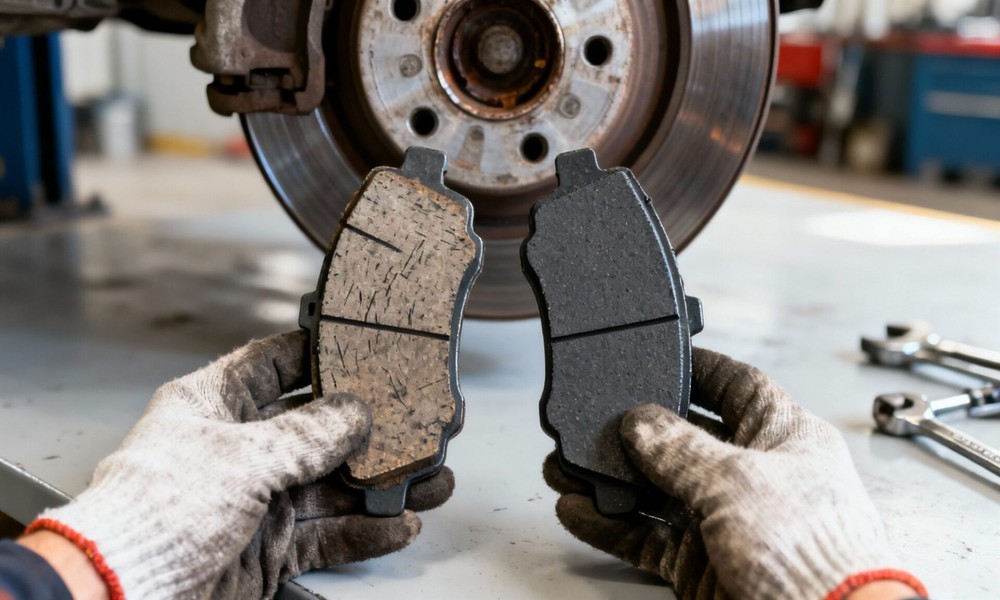
For instance, if you have a hybrid or electric vehicle, you may have heard a startling assertion. Brake pads have a lifespan of over 100,000 kilometres. Sometimes even longer. To a lot of drivers, that sounds impossible.
It’s not a myth. It’s regenerative braking.
However, there is a crucial catch that many individuals overlook because, while brake pads stay longer, the brake system will still demand consistent maintenance. Especially brake fluid.
Let me put that in layman language.
What is Regenerative Braking?
Regenerative braking is a system that is applied in hybrid and electric vehicles. Instead of dissipating energy as heat when you slow down, the car harnesses that energy and returns it to the battery.
In simple terms:
- The motor helps slow the car
- The battery recharges during braking
- The brake pads experience less use
In turn, this leads to less stress on standard braking components. Hence, the pad life can be increased exponentially.
Many drivers hiring car service in Narre Warren discover that, despite all those years of driving, their brake pads are hardly worn at all.
The Reason for the Longevity of Brake Pads
For example, a petrol or diesel car will mainly use pads and discs to brake. Every slowdown creates friction. Friction means wear.
With regenerative braking:
- Light braking is done by the electric motor
- We use pads mainly for more of a harder stop
- Compared to city driving, fewer brakes are used
Which is why the vast majority of hybrids do not require new pads until well beyond the 80,000km mark.
When these vehicles are routinely tested, a trusted mechanic in Narre Warren will often report brake pads are still well within safe limits.
Longer Life of Pads Does Not Equal to “No Maintenance”
This is where the drivers are caught out.
Long-lasting brake pads should not mean that the braking system can be neglected. Brake fluid still ages. Water still penetrates through the system.
Over time, this causes:
- Internal corrosion
- Sticky callipers
- Reduced braking performance
Moisture and dust from the air are absorbed in the brake fluid. Even if the car is not regularly used.
However, this does not mean that only pad thickness needs to be checked in a car service Narre Warren, fluid condition also needs to be tested.
Brakes Remain a Stalwart on the Street
Lower speeds and declines are when regenerative systems shine. However, emergency braking, downhill driving, and unexpected stops use regular brakes.
This means:
- Discs can still corrode
- Callipers still need movement
- Pads can glaze if unused
Even if there is little wear and tear, regular inspections during a car service in Narre Warren will keep everything functioning well.
Workshops: What Hybrid and EV Owners Want
Not every workshop has the knowledge about regenerative braking systems. Since low wear is assumed − No Work Needed.
That’s a mistake.
Keeping in mind that modern vehicles more often than not need different servicing logic, workshops like A1 Gas & Mechanical Services Pty Ltd. Hidden failures from replacing parts to prevent replacements
An experienced mechanic in Narre Warren will not simply say, your pads are OK. They’ll look deeper.
What Smart Maintenance Looks Like
Smart servicing for all vehicles, especially those with regenerative braking includes:
- Fluid testing and flushing brake fluid from the automobile
- Cleaning and lubricating callipers
- Inspecting discs for corrosion
- Software checks where applicable
This approach heals the entire organism, not just the visible disease process.
Final Thoughts
Well, regenerative braking can have brake pads last up to 100,000km and beyond. This is one of the great advantages of modern vehicle tech.
However, brakes are more than just pads.
Neglecting brake fluid and calliper condition can come back to bite you. A balanced maintenance is the best strategy.
A meticulous mechanic Narre Warren knows that pad longevity is not an excuse for neglect. It signals better servicing; not less servicing.